Difference Between Accounts Payable and Accounts Receivable: What UK Businesses Need to Know
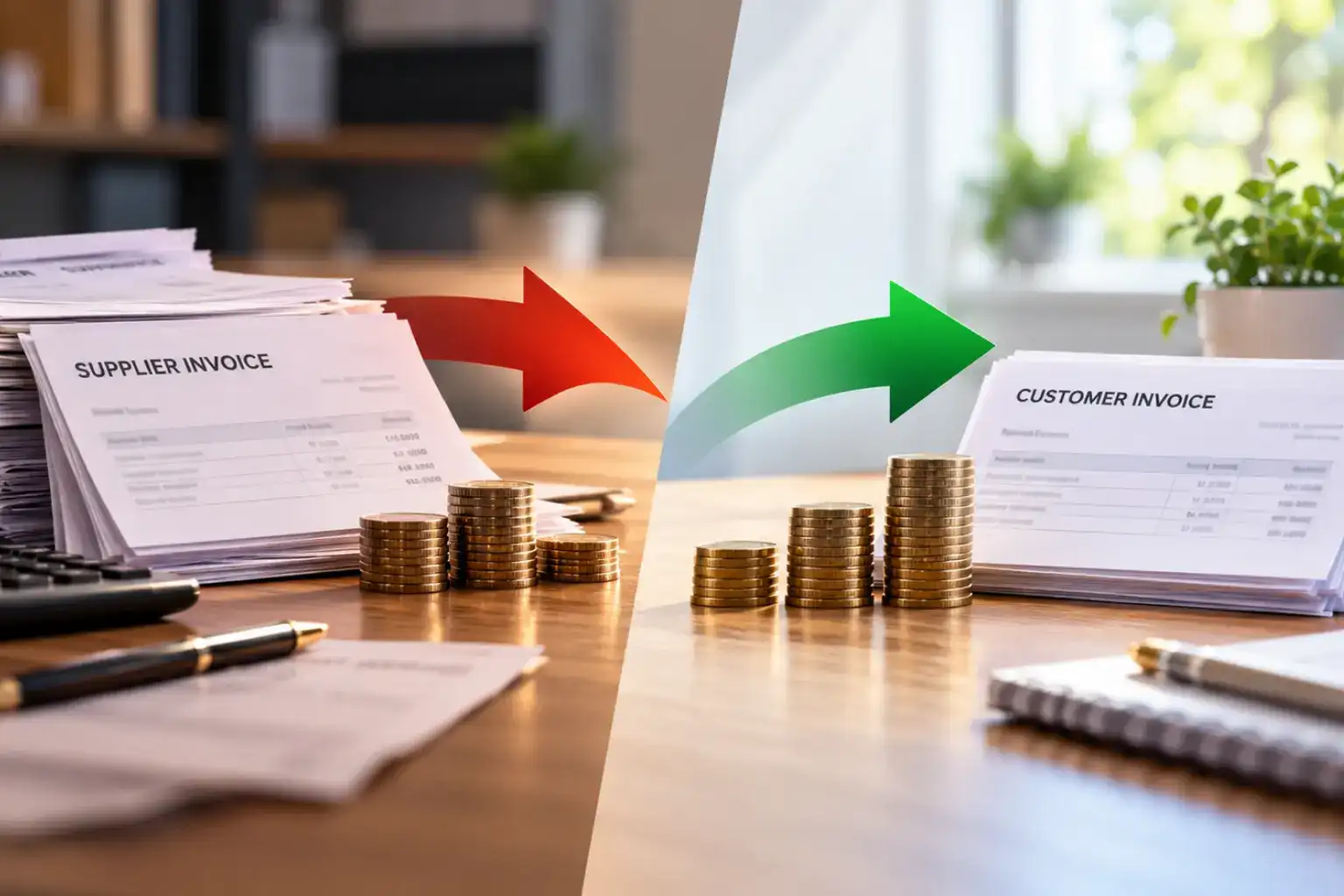
Every business that sells on credit or buys from suppliers on credit will eventually deal with accounts payable and accounts receivable. They are two sides of the same commercial relationship: one records money your business owes, while the other records money your customers owe you. Understanding the difference is essential for managing cash flow, avoiding late payments, and knowing when a business loan may be the right form of support.
For UK SMEs, the distinction matters even more because delayed customer payments and supplier deadlines can create a cash flow gap even when the business is profitable on paper. This guide explains business credit first, then breaks down accounts payable and accounts receivable, how they affect your finances, and how a business loan from SimplyFunded can help bridge temporary shortfalls.
What Is Business Credit?
Business credit is the ability of a company to buy now and pay later, or to borrow money based on its trading history, financial performance, and repayment behaviour. It exists in two broad forms:
- Trade credit: A supplier allows your business to receive goods or services now and pay later, often within 30, 60, or 90 days.
- Lending credit: A lender provides a business loan, overdraft, credit line, or another funding product that must be repaid over an agreed term.
Business credit is not only about a credit score. Lenders and suppliers may also look at:
- Monthly turnover and revenue consistency
- Time spent trading
- Business bank account activity
- Outstanding invoices and payment history
- Existing debts and affordability
- Director or owner credit history, depending on the product
Strong business credit can make it easier to negotiate better supplier terms, secure larger orders, and access funding when needed. Weak or inconsistent credit can make suppliers demand upfront payment and lenders apply stricter affordability checks.
For many UK SMEs, business credit is a practical growth tool. A company may use it to buy stock before a busy season, cover payroll while waiting for customer invoices, or invest in equipment without draining cash reserves.
Business Loan: The First Type of Business Credit
A business loan is one of the most common forms of business credit. It gives a company a lump sum of money upfront, which is then repaid over a fixed period, usually with interest or a fixed fee.
UK businesses commonly use business loans for:
- Covering short-term cash flow gaps
- Paying suppliers or HMRC bills
- Buying stock or equipment
- Funding recruitment or marketing
- Managing seasonal demand
- Supporting expansion or new contracts
A business loan is different from trade credit because it is usually provided by a lender rather than a supplier. Instead of receiving inventory or services on deferred terms, the business receives cash that can be used flexibly.
At SimplyFunded, eligible UK SMEs can apply for unsecured business funding from £5,000 to £500,000. The application is designed to be straightforward, with decisions within hours and funds potentially available within 24 hours for approved applicants. SimplyFunded assesses affordability using business performance and bank data, rather than relying solely on a credit score.
A business loan can be especially useful when accounts receivable is delayed, but accounts payable are due. For example, if a customer has 60 days to pay an invoice but your supplier requires payment in 14 days, a short-term business loan can help you meet the supplier deadline without damaging relationships or missing opportunities.
What Are Accounts Payable?
Accounts payable (AP) is the money your business owes to suppliers, vendors, contractors, or other creditors for goods and services already received but not yet paid for.
Accounts payable = money your business owes.
Examples include:
- A wholesaler supplies £10,000 of stock with payment due in 30 days
- A marketing agency invoices your business for a campaign
- A utility provider bills your company for electricity
- A software provider charges a monthly subscription
- A contractor completes work and invoices you on 14-day terms
When you receive an invoice from a supplier, it becomes an accounts payable entry until it is paid. Once payment is made, the liability is removed from your accounts.
Why Accounts Payable Matters
Accounts payable is a short-term liability. Managing it well helps you:
- Maintain good supplier relationships
- Avoid late-payment fees
- Protect access to trade credit
- Plan outgoing cash more accurately
- Prevent supply disruptions
However, paying every invoice immediately is not always the best cash flow strategy. If a supplier offers 30-day terms, using that period wisely can keep cash in the business for longer. The key is to pay on time without unnecessarily reducing your available working capital.
What Are Accounts Receivable?
Accounts receivable (AR) is the money owed to your business by customers who have received goods or services but have not yet paid.
Accounts receivable = money owed to your business.
Examples include:
- You invoice a client £15,000 with 30-day payment terms
- A retailer buys stock from you on 60-day credit
- A business customer has received your service but has not settled the invoice
- A customer pays a deposit, with the balance due after delivery
Accounts receivable is recorded as an asset because it represents future cash coming into the business. But it is only genuinely useful once the customer pays.
Why Accounts Receivable Matters
Accounts receivable directly affects liquidity. A business can be profitable while still struggling to pay bills if too much cash is tied up in unpaid invoices.
Good accounts receivable management includes:
- Issuing invoices promptly
- Setting clear payment terms
- Sending reminders before due dates
- Following up quickly on overdue invoices
- Offering convenient payment methods
- Checking the creditworthiness of new customers
- Considering deposits or upfront payments for higher-risk clients
The faster you convert receivables into cash, the healthier your working capital position becomes.
Accounts Payable vs Accounts Receivable
The core difference is direction:
| Aspect | Accounts Payable | Accounts Receivable |
|---|---|---|
| Meaning | Money your business owes | Money owed to your business |
| Who owes whom? | You owe a supplier or vendor | A customer owes you |
| Accounting category | Liability | Asset |
| Cash flow impact | Cash will leave the business | Cash should enter the business |
| Typical documents | Supplier invoices, bills | Customer invoices |
| Main risk | Late payment, supplier penalties | Late customer payment, bad debt |
| Relationship to credit | You are using supplier credit | You are extending credit to customers |
A simple example shows how they interact.
Imagine a UK wholesaler buys £20,000 of stock from a supplier on 30-day terms. At the same time, it sells that stock to a retail customer for £30,000 on 60-day terms.
- The £20,000 owed to the supplier is accounts payable.
- The £30,000 owed by the retail customer is accounts receivable.
- The wholesaler must pay the supplier before the customer pays them.
That 30-day mismatch creates a cash flow gap. The business may be profitable, but it still needs cash to pay the supplier on time. This is where a business loan can provide practical support.
How AP and AR Affect Business Cash Flow
Cash flow is not the same as profit. Profit measures whether revenue exceeds costs over time. Cash flow measures when money actually enters and leaves your bank account.
A business can have strong sales and still face a cash shortage if:
- Customers pay late
- Supplier invoices fall due earlier than customer invoices
- Large orders require upfront stock purchases
- Seasonal demand creates uneven income
- HMRC payments, payroll, or rent coincide with slow receivables
Accounts payable and accounts receivable sit at the centre of this issue.
When Accounts Payable Creates Pressure
AP creates pressure when several supplier invoices become due at once. This can happen after a large stock purchase, a busy trading period, or an unexpected expense.
If your business cannot pay suppliers on time, consequences may include:
- Loss of trade credit
- Late fees or interest charges
- Damaged supplier relationships
- Delayed deliveries
- Reduced ability to fulfil customer orders
When Accounts Receivable Creates Pressure
AR creates pressure when customers delay payment. Even a small number of late invoices can disrupt payroll, rent, VAT, Corporation Tax, or supplier payments.
The risk is greater when your business has:
- Long customer payment terms
- A small number of large clients
- Seasonal sales cycles
- Limited cash reserves
- Rapid growth requiring upfront investment
How a Business Loan Can Help Manage the Gap
A business loan does not replace good invoice management, but it can provide breathing space when the timing of payables and receivables does not align.
For example, suppose your business has:
- £25,000 in supplier invoices due within 10 days
- £40,000 in customer invoices due in 45 days
- Limited available cash
You could use a short-term business loan to cover the supplier invoices now, then repay the loan once customer payments arrive. This can help you avoid late supplier payments, protect stock supply, and continue operating normally.
SimplyFunded provides fast, flexible business loans for UK SMEs, with funding from £5,000 to £500,000 subject to eligibility and approval. The funding can be used for working capital needs such as supplier payments, stock, payroll, HMRC bills, equipment, or short-term cash flow gaps.
Before applying, it is sensible to calculate:
- The exact cash flow gap
- When customer payments are expected
- The total amount needed to cover payables
- How the loan repayments will fit into future cash flow
- Whether the funding will protect revenue or unlock a growth opportunity
A loan should support a clear need, not simply delay a deeper underlying issue. If late customer payments are recurring, improving credit control should remain a priority alongside any short-term funding.
Practical Ways to Manage AP and AR
Improve Accounts Payable Management
- Keep a clear payment calendar for all supplier invoices
- Prioritise invoices by due date, supplier importance, and penalty risk
- Negotiate longer payment terms where possible
- Avoid paying early unless there is a meaningful discount
- Review recurring subscriptions and cancel unused services
- Build a cash reserve for predictable bills such as VAT, payroll, and rent
Improve Accounts Receivable Management
- Invoice immediately after completing work or delivering goods
- State payment terms clearly on every invoice
- Send reminders before the due date, not only after it passes
- Make payment easy through bank transfer, card payment, or direct debit
- Run credit checks on larger or long-term customers
- Ask for deposits on large projects
- Track aged debt weekly so overdue invoices do not build up unnoticed
Use Funding Strategically
A business loan can be useful when there is a temporary timing gap between paying suppliers and receiving customer payments. It can also support growth when a new contract requires upfront stock, staff, or equipment.
The most effective approach is to match the funding to the need. Short-term working capital is generally better suited to temporary cash flow gaps, while longer-term investment may require a different funding structure.
Common Mistakes UK Businesses Make
- Confusing profit with available cash
- Allowing customer payment terms to become too long
- Failing to chase overdue invoices consistently
- Paying suppliers late and damaging trade credit
- Taking on debt without a clear repayment plan
- Using personal savings to cover repeated business cash flow gaps
- Ignoring seasonal patterns in sales and expenses
- Waiting until cash flow is critical before seeking funding
Avoiding these mistakes can make your accounts payable and receivable processes more predictable, reducing the need for emergency funding.
When to Consider a Business Loan
A business loan may be worth considering if:
- You have confirmed sales, but customers have not paid yet
- Supplier invoices are due before receivables arrive
- You need stock to fulfil a profitable order
- You want to avoid late payment penalties
- You need working capital for a seasonal peak
- You have a clear plan to repay the borrowing from incoming revenue
SimplyFunded works with UK limited companies, LLPs, and sole traders that meet its eligibility criteria, including at least six months of trading, £5,000 or more in average monthly revenue, and an active UK business bank account. Applications are assessed on business performance and affordability, with eligible applicants able to receive a decision quickly.
FAQ
What is the main difference between accounts payable and accounts receivable?
Accounts payable is money your business owes to suppliers or vendors. Accounts receivable is money customers owe your business. AP is a liability; AR is an asset.
Is an account payable for a debit or credit?
In standard double-entry bookkeeping, accounts payable normally has a credit balance because it represents a liability. When you pay the invoice, you debit accounts payable and credit cash.
Is accounts receivable an asset?
Yes. Accounts receivable is a current asset because it represents money expected to be received from customers, usually within a short period.
Can a business have both accounts payable and accounts receivable?
Yes. Most businesses that buy on credit and sell on credit will have both. The important issue is timing: supplier payments may be due before customer payments arrive.
How do accounts payable and receivable affect cash flow?
Accounts payable represents future cash going out, while accounts receivable represents future cash coming in. If payables are due before receivables are collected, the business can face a temporary cash flow gap.
What is trade credit?
Trade credit is when a supplier allows your business to receive goods or services now and pay later. It is a form of business credit and often appears as accounts payable in your accounts.
How can a business loan help with late customer payments?
A business loan can provide working capital to cover supplier invoices, payroll, stock, or other urgent costs while you wait for customer payments. It helps bridge the timing gap between money owed to you and money you owe.
What is a good accounts receivable process?
A good process includes prompt invoicing, clear payment terms, automated reminders, regular follow-up on overdue accounts, easy payment options, and weekly monitoring of aged receivables.
Should I always pay supplier invoices early?
Not necessarily. Paying early can be helpful if it secures a discount or strengthens an important supplier relationship. Otherwise, using agreed payment terms can help preserve working capital.
When should a UK business apply for a business loan?
A business should consider applying when it has a clear, affordable need for working capital, such as covering a short-term cash flow gap, paying suppliers, buying stock, or funding growth. SimplyFunded offers unsecured business loans from £5,000 to £500,000 for eligible UK SMEs.
Does SimplyFunded offer business loans to sole traders?
Yes. SimplyFunded offers funding to eligible sole traders as well as limited companies and LLPs, subject to its trading history, revenue, ownership, and affordability requirements.
Can a business loan improve business credit?
Used responsibly, a business loan that is repaid on time can support a stronger repayment track record. However, every business should borrow only what it can comfortably afford to repay.
Looking at funding for your business?
Explore your options with SimplyFunded and find out what may suit your business.
Check your options